
Search Florida Civil Court Records
Florida civil court records are public files kept by county Clerks of Court across the state. All 67 counties hold their own civil case filings, lawsuits, judgments, liens, and other court documents. You can search for Florida civil court records online through the statewide E-Filing Portal or visit a local clerk's office in person. The portal runs around the clock. It lets you find and file civil court documents from home without a trip to the courthouse. County clerks also help with in-person record searches. Whether you need to look up a civil case, pull a court filing, or get copies of case documents, Florida provides several ways to search and access civil court records.
Florida Civil Court Records Quick Facts
Where to Find Florida Civil Court Records
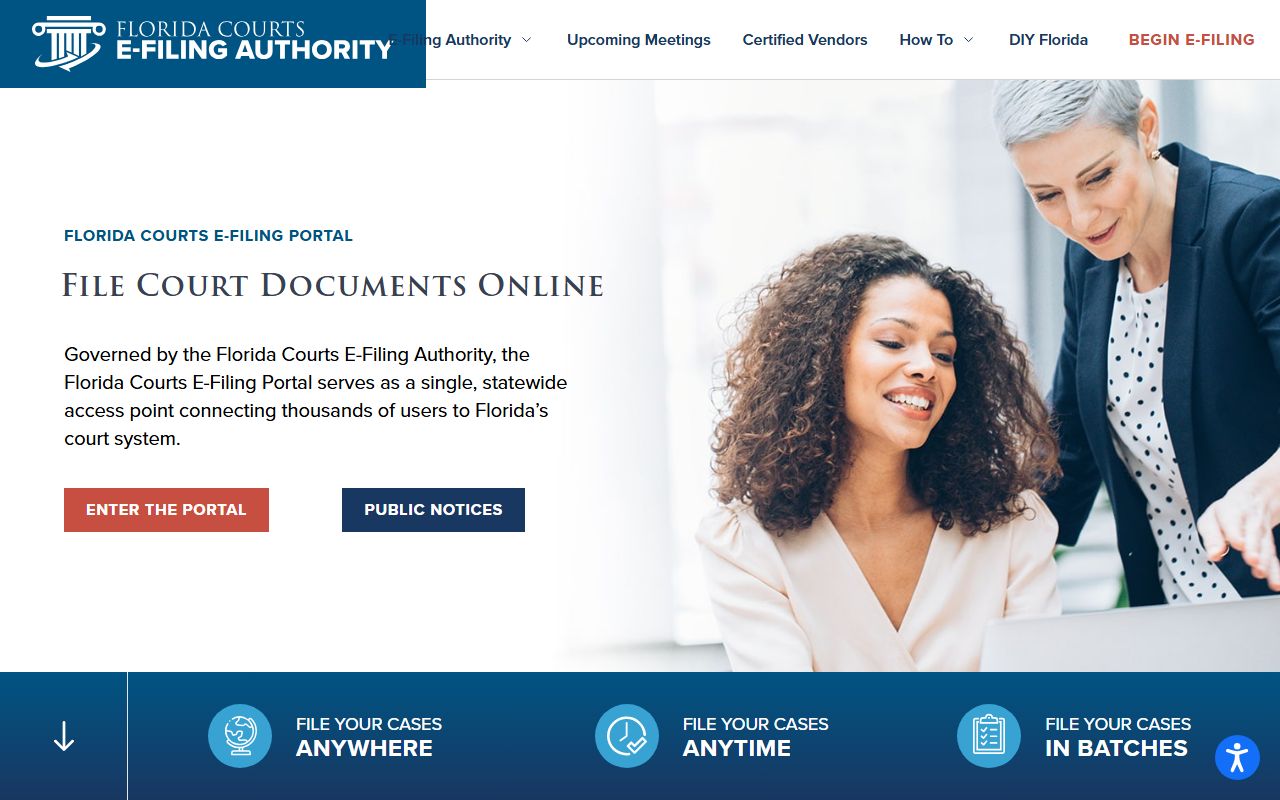
There are two main ways to get civil court records in Florida. Online access is the fastest. The Florida Courts E-Filing Portal is the single statewide site for court filings. It links more than 770,000 users to civil court records in all 67 counties. You can search for cases and view filed documents through this portal at any time. It has saved filers an estimated $38 million in postage by providing a way to send documents without mail or a courier. Attorneys, self-represented litigants, and the general public can all use this tool to access Florida civil court records from home or an office.
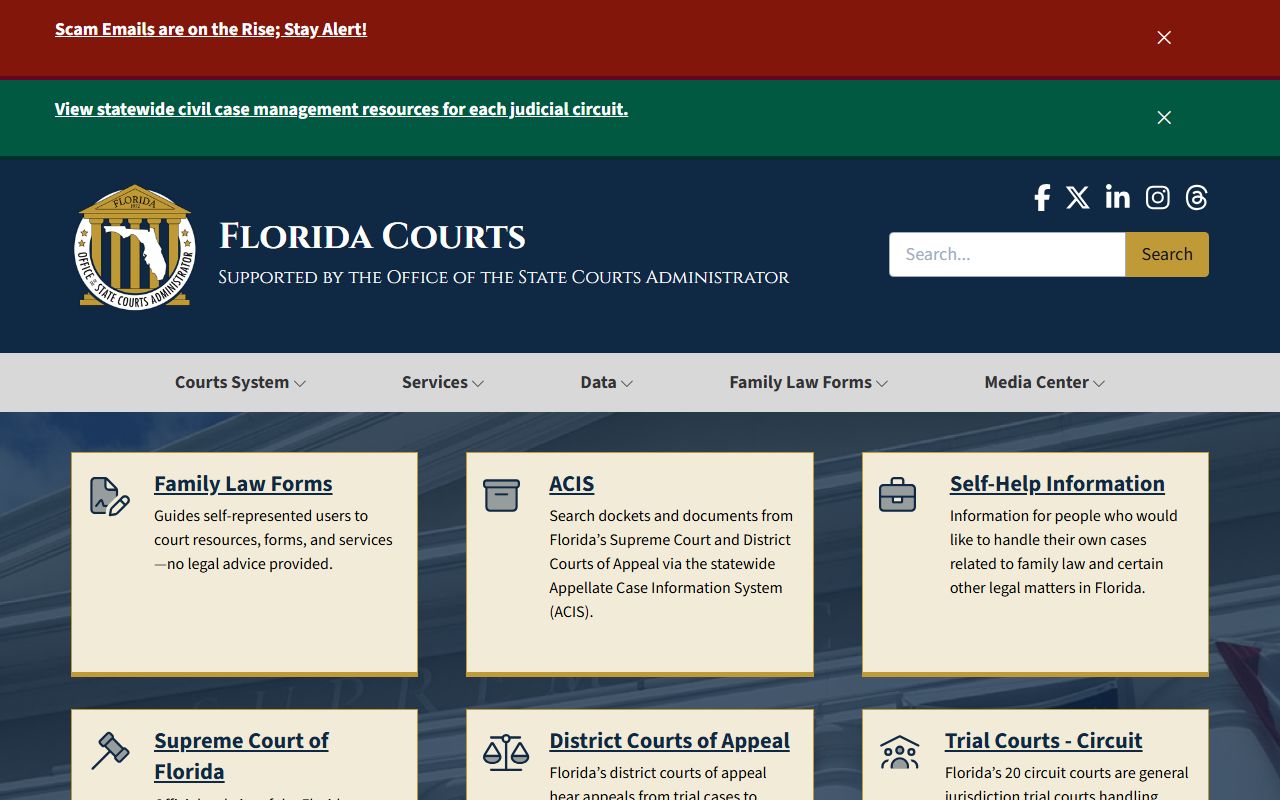
The Florida Courts website is the main hub for court info across the state. It covers civil case management, court locations, and self-help forms for people who want to file on their own.
The second way is in person. Each county Clerk of Court holds the original civil case files. You can walk into any clerk's office during business hours to search for records, ask for copies, or file new civil court papers. Most offices are open Monday through Friday. Staff can look up cases by name or case number. Certified copies of civil court documents cost more than plain ones, but both are available at the counter. Some county clerks also accept mail requests for copies of civil court records in Florida.
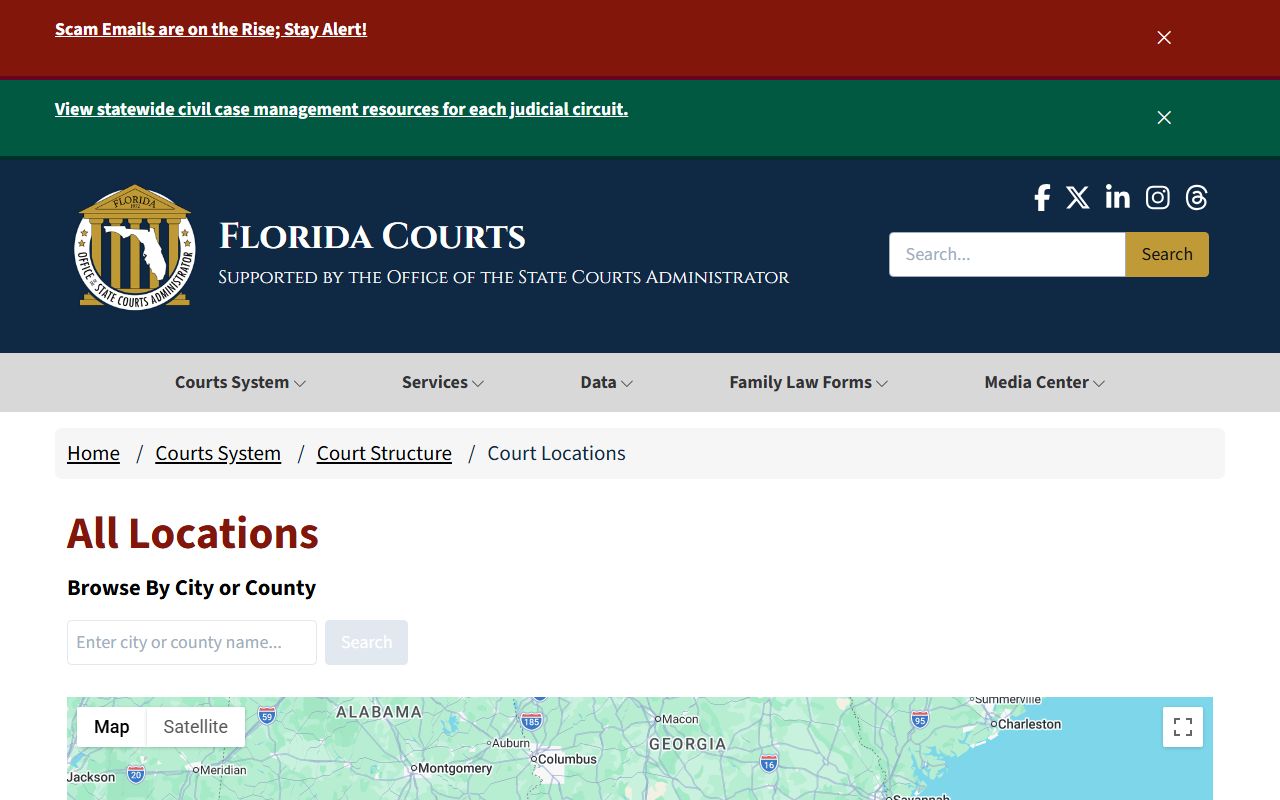
The Florida court locations page lists every courthouse in the state.
Florida Civil Court System
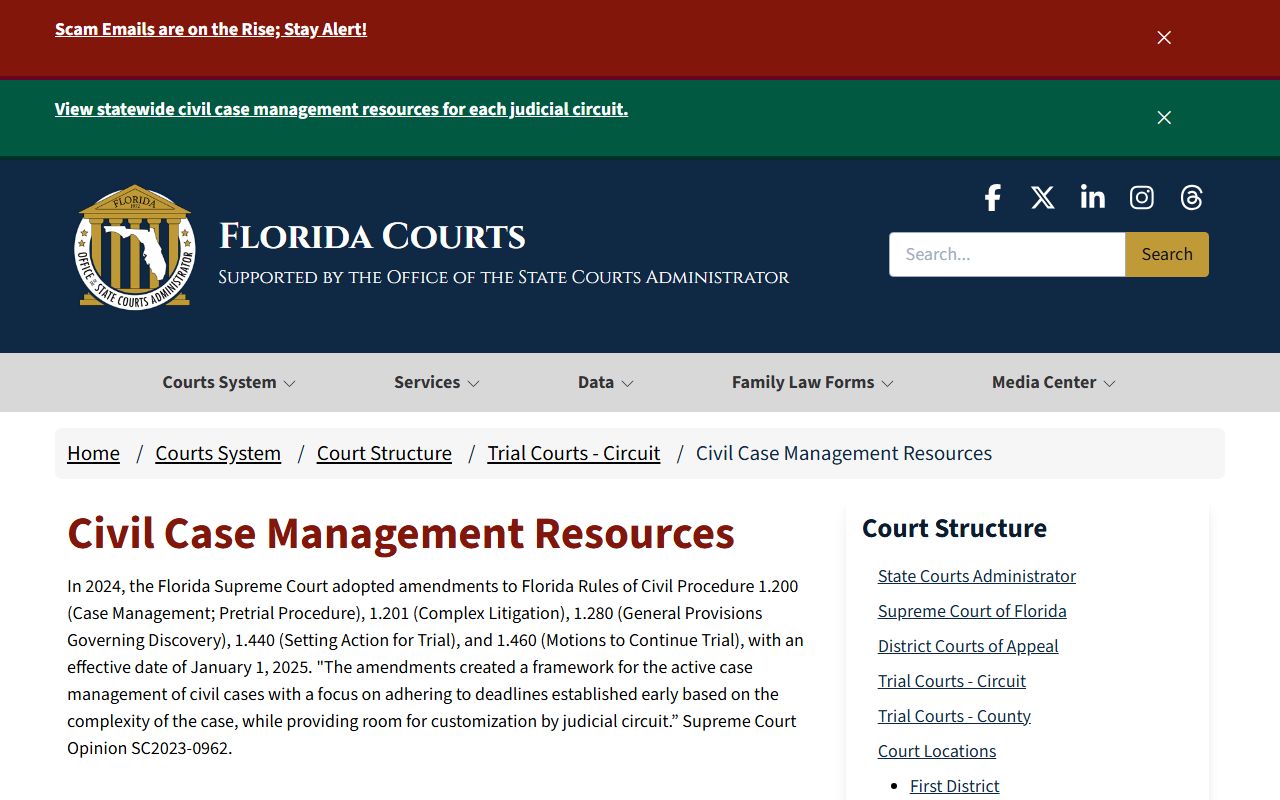
Florida's court system handles civil cases at two trial court levels. Circuit Courts have general jurisdiction over civil cases above $30,000, family law, and probate matters. County Courts handle smaller civil cases up to $30,000, small claims up to $8,000, and landlord-tenant disputes. The state splits its 67 counties into 20 judicial circuits. Each circuit covers one or more counties and manages civil case flow within its area. In 2024, the Florida Supreme Court adopted changes to the Rules of Civil Procedure with a focus on active case management and meeting deadlines based on case complexity, effective January 1, 2025.
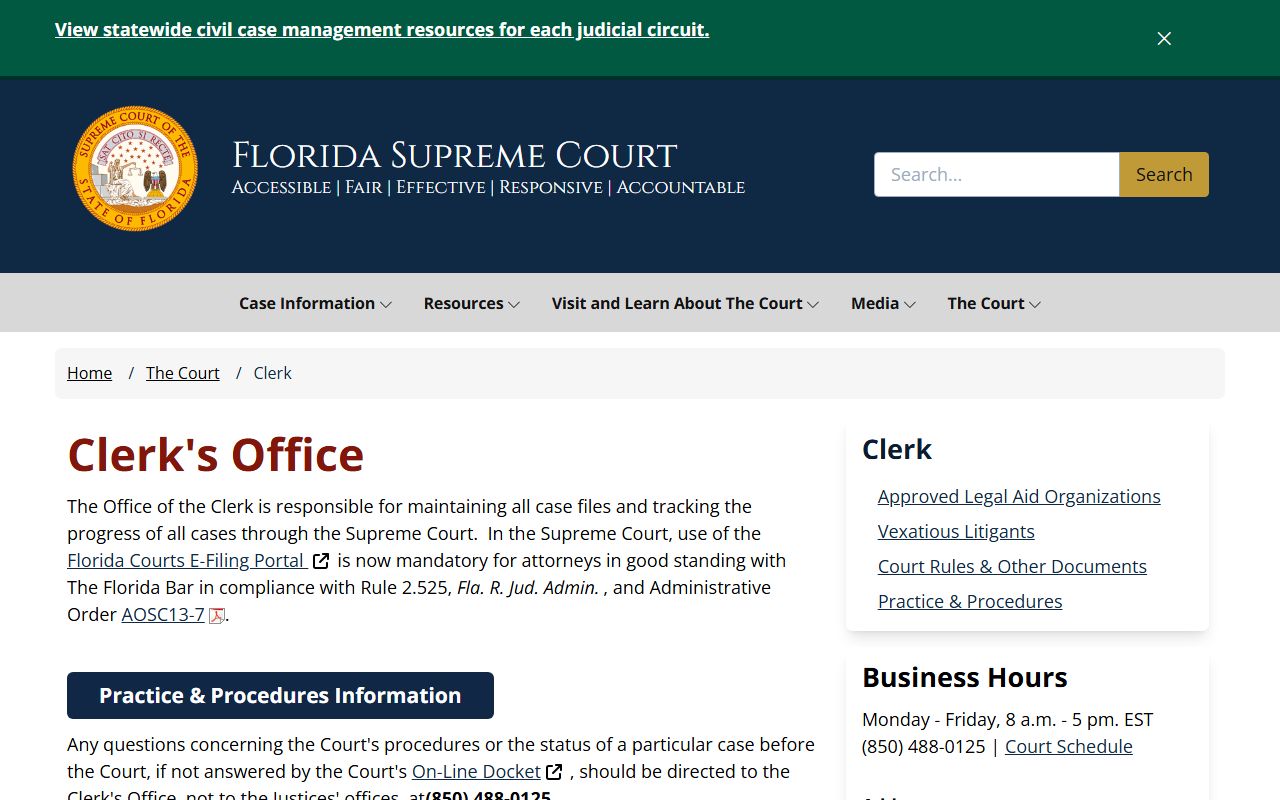
Above the trial courts sit five District Courts of Appeal and the Florida Supreme Court in Tallahassee. Appeals from civil cases go through these higher courts. The Supreme Court Clerk's Office is at 500 South Duval Street in Tallahassee. Its hours are Monday through Friday, 8 a.m. to 5 p.m. Eastern time.
The civil case management resources page has details on the 2024 rule amendments. Each judicial circuit may set its own administrative orders for managing civil cases. Check your local circuit's site for the latest rules that apply to civil court records in your area of Florida.
Florida Civil Court E-Filing Portal
The Florida Courts E-Filing Authority runs the statewide portal. This body includes all 67 elected Clerks of the Circuit and County Court plus the Clerk of the Supreme Court. The portal lets users file cases at any time. It is free to register. Only statutory filing fees and small payment processing charges apply when you file civil court papers in Florida. The portal accepts credit cards (Visa, MasterCard, American Express, Discover) and electronic checks from checking or savings accounts.
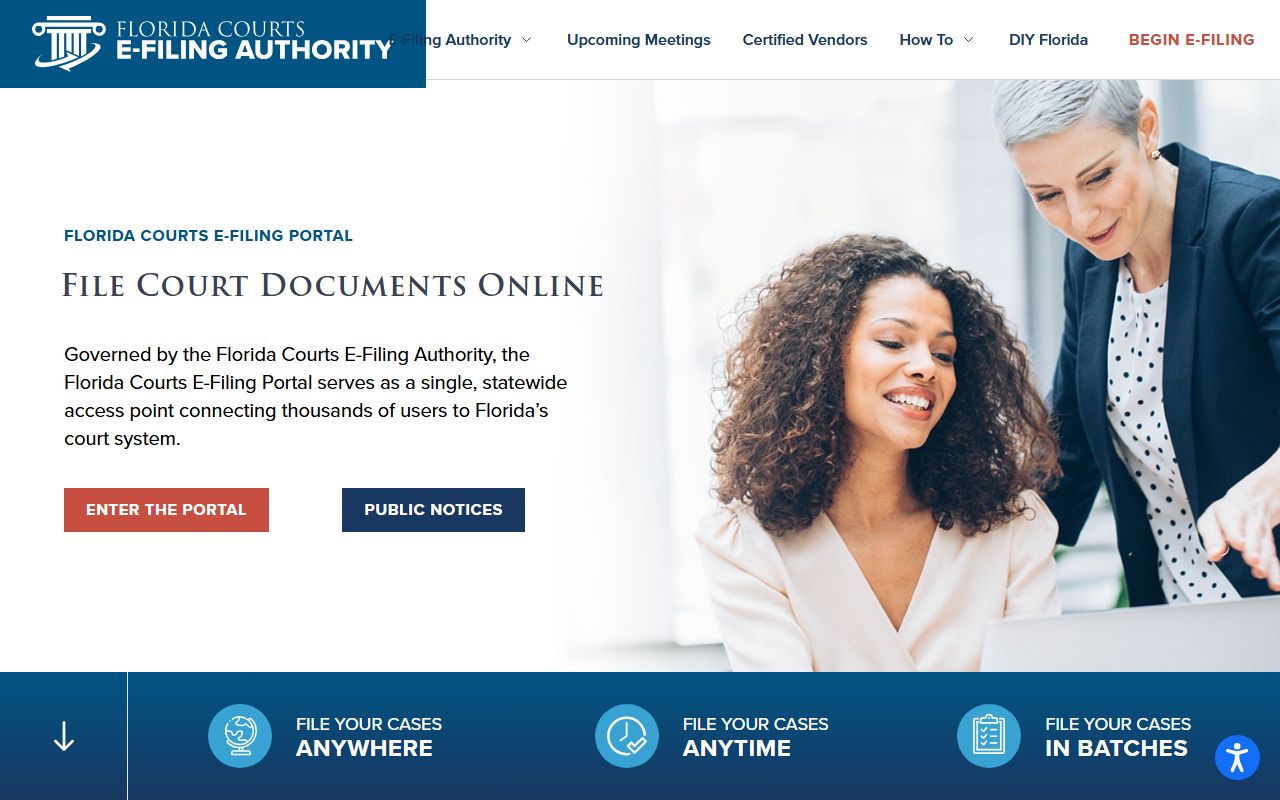
More than 82,000 attorneys and 220,000 self-represented litigants use the portal. It handles over 30 million documents each year. You can file single documents or batch-file many at once, which saves time for attorneys who handle a high volume of civil court cases in Florida. Attorneys are required to file through the portal. Paper filings are not accepted from counsel.
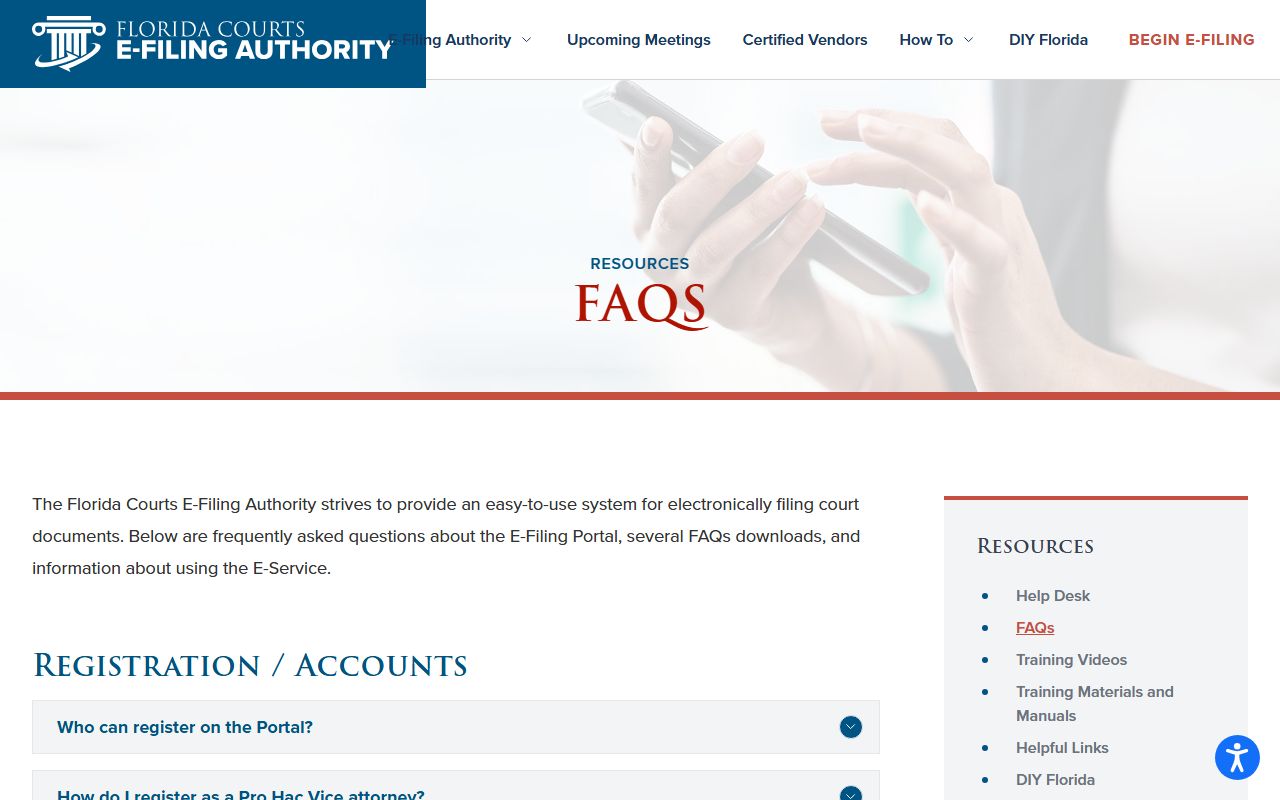
The portal's FAQ page answers common questions about registration and fees. Registration is open to Florida Bar attorneys, pro hac vice attorneys, state agency counsel, court reporters, creditors, media, mediators, mental health professionals, process servers, and self-represented litigants.
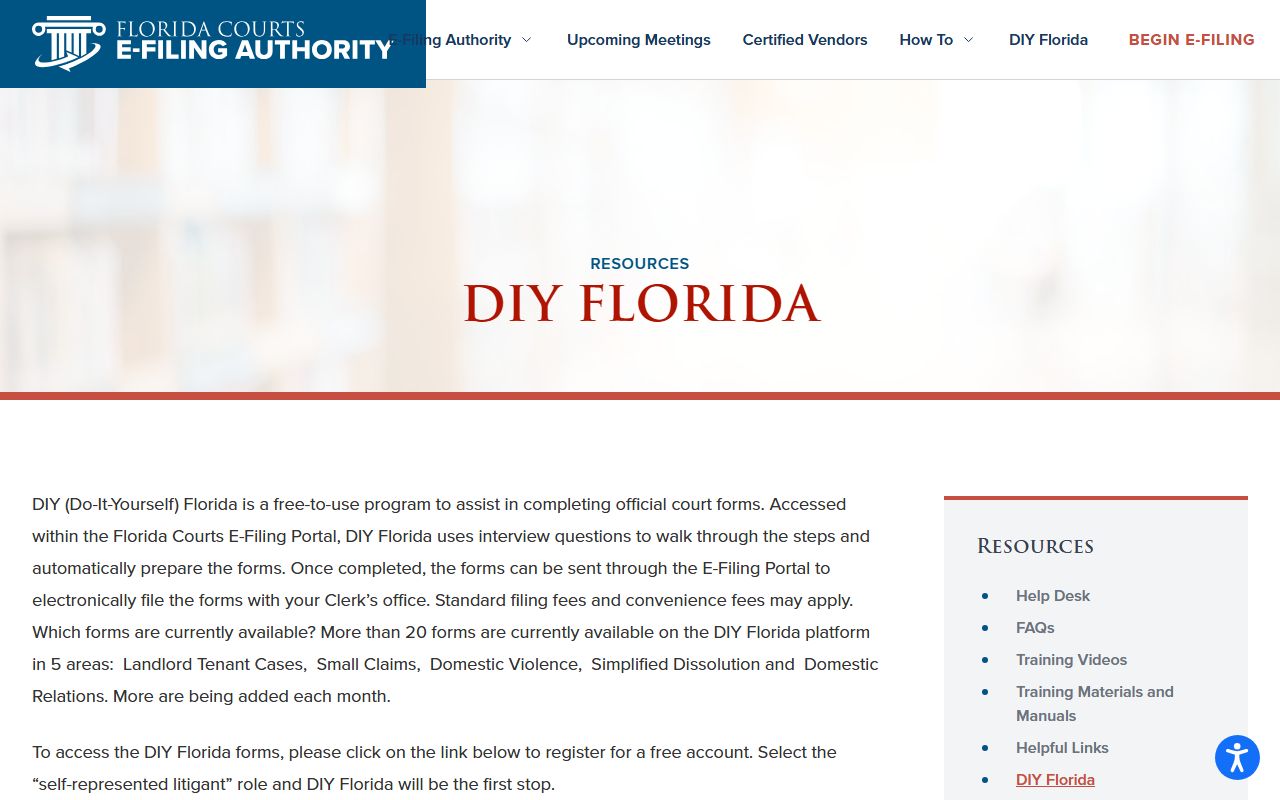
DIY Florida is a free program inside the portal. It walks users through interview questions to fill out official court forms. More than 20 forms are available in five areas: landlord-tenant cases, small claims, domestic violence, simplified dissolution, and domestic relations. The program creates the forms for you. Then you can send them through the portal to the clerk's office. Standard filing fees still apply when you submit civil court documents in Florida through the DIY system.
Public Records Access in Florida
Florida has strong public records laws. Chapter 119 of the Florida Statutes says that all state, county, and municipal records are open for personal inspection and copying by any person. This includes civil court records. You do not need to be a party in the case. You do not need to give a reason for your request. The law says providing access to public records is a duty of each agency. Requests can be made in writing or spoken aloud, and the custodian must respond within a reasonable time frame.
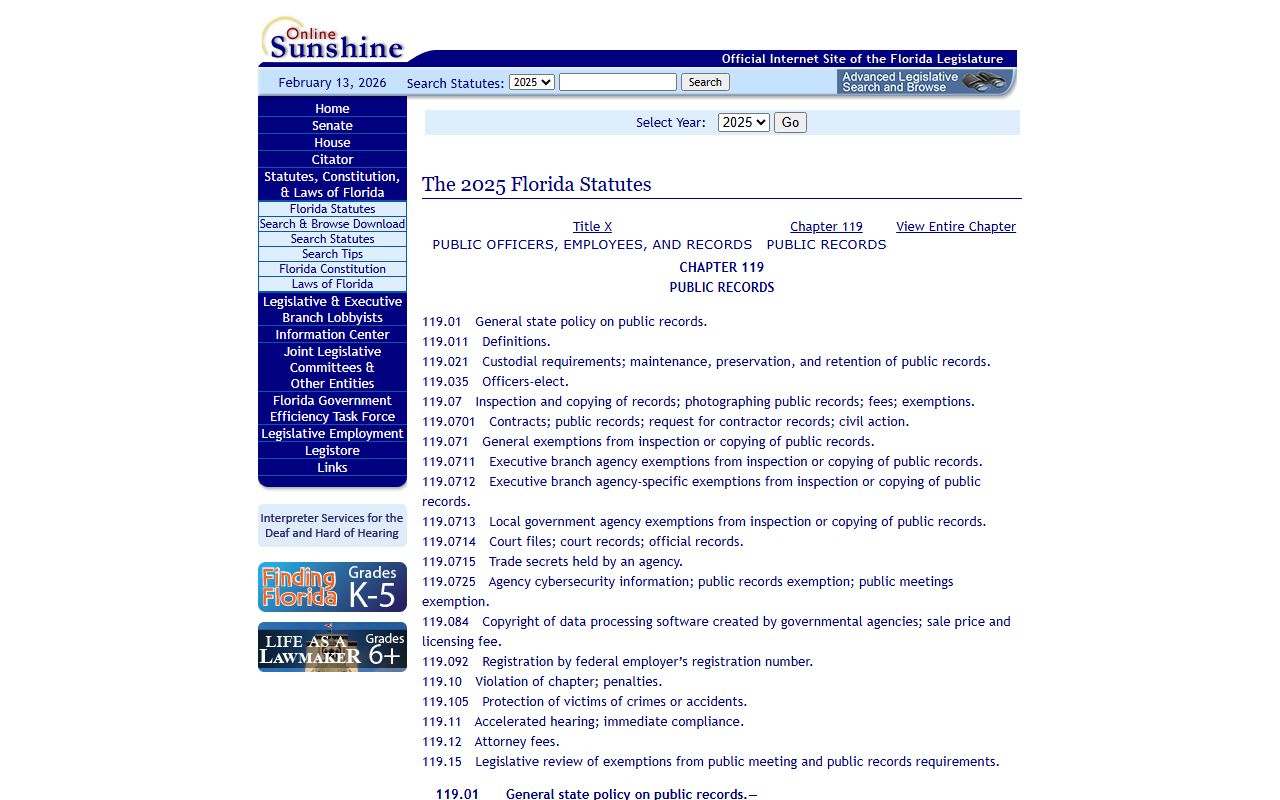
Some limits apply. Section 119.0714 of the Florida Statutes lists items that clerks must keep confidential in civil court records. Social security numbers and bank account, debit, charge, and credit card numbers are exempt from public access. Clerks will redact these at no charge if you submit a written request with the case name, case number, document heading, and page number. Florida Rule of Judicial Administration 2.420 also spells out what records in the judicial branch are automatically confidential, including certain juvenile records and identities of abuse victims.
Anonymous public users can view all civil court records that are not expunged, sealed, or made confidential by court order or law. No registration is needed for basic searches.
Florida Court Clerks and Comptrollers
The Florida Court Clerks and Comptrollers (FCCC) is the association of all 67 elected clerks. Each clerk performs record keeping, information management, and financial administration for the courts and county government. They are the custodians of civil court records in their county. Services include filing civil cases, maintaining official records, processing e-filings, and issuing certified copies of court documents.
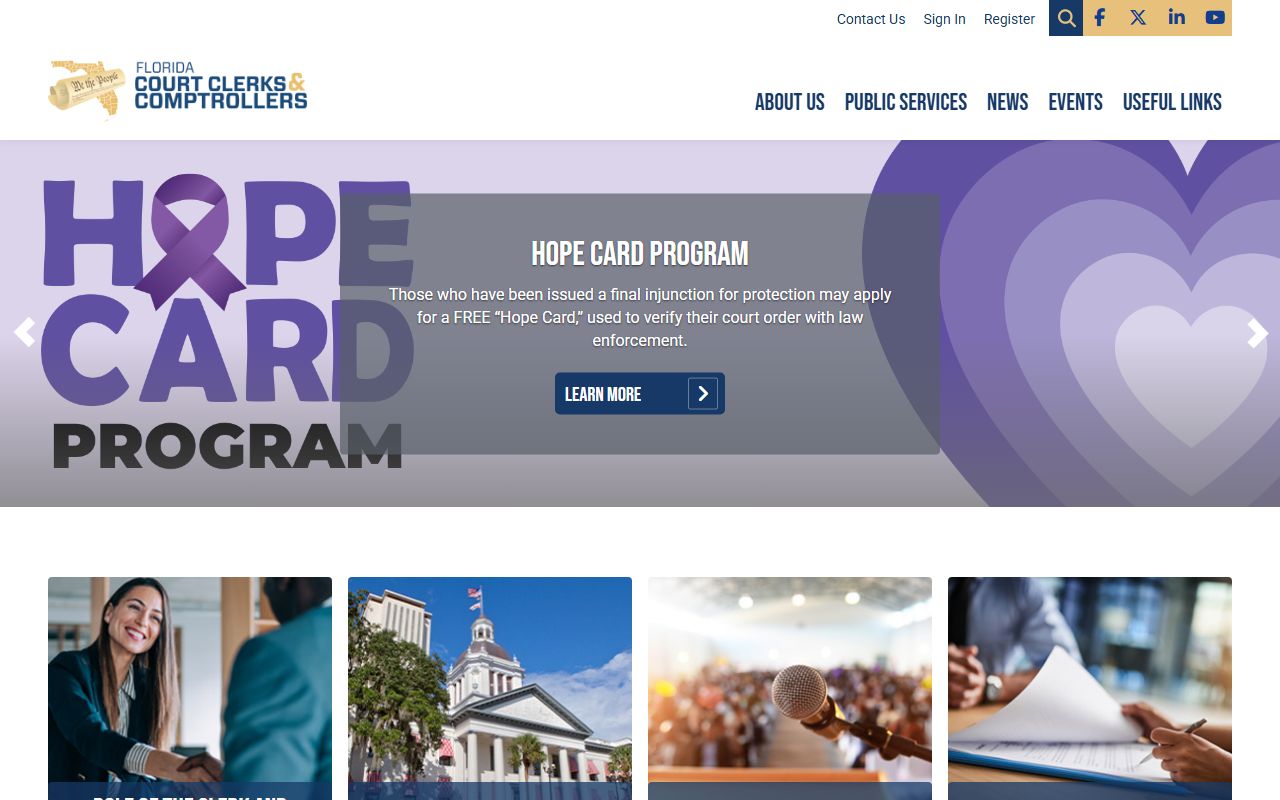
The Find a Clerk directory on the FCCC website lets you look up any county clerk in Florida. It lists phone numbers, addresses, and links to each clerk's website. This is a good first step if you need to find civil court records in a specific county but are not sure who to contact. The FCCC also offers the Hope Card Program, which is free for anyone with a final injunction for protection.
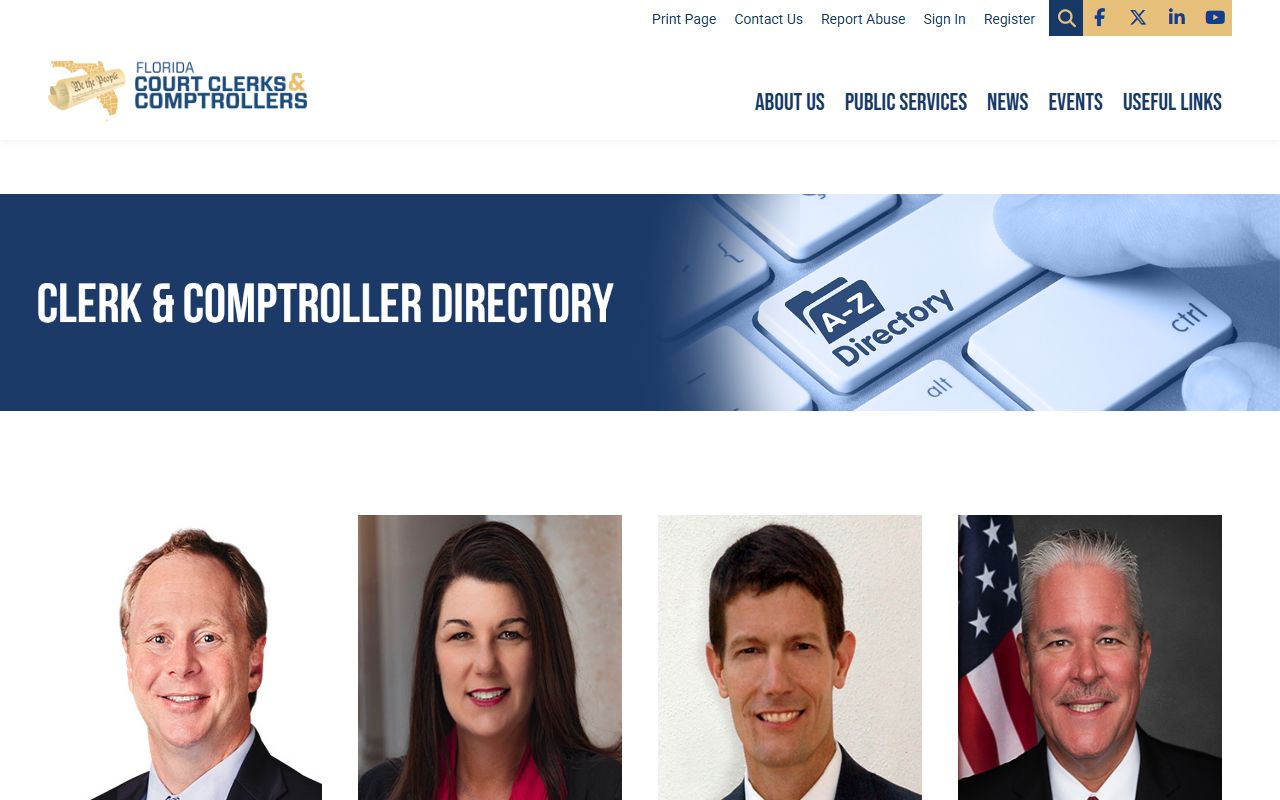
Most county clerk offices are open weekdays. Hours vary by county.
Filing Civil Court Cases in Florida
To start a civil case in Florida, you file a complaint or petition with the Clerk of Court in the proper county. Filing fees depend on the type and value of the claim. In Broward County, for example, county civil filing fees range from $55 for claims up to $100 to $400 for claims between $15,000 and $50,000. A summons costs $10 per defendant. Writ fees run $85. These amounts can differ by county, so check with your local clerk before you file a civil court case.
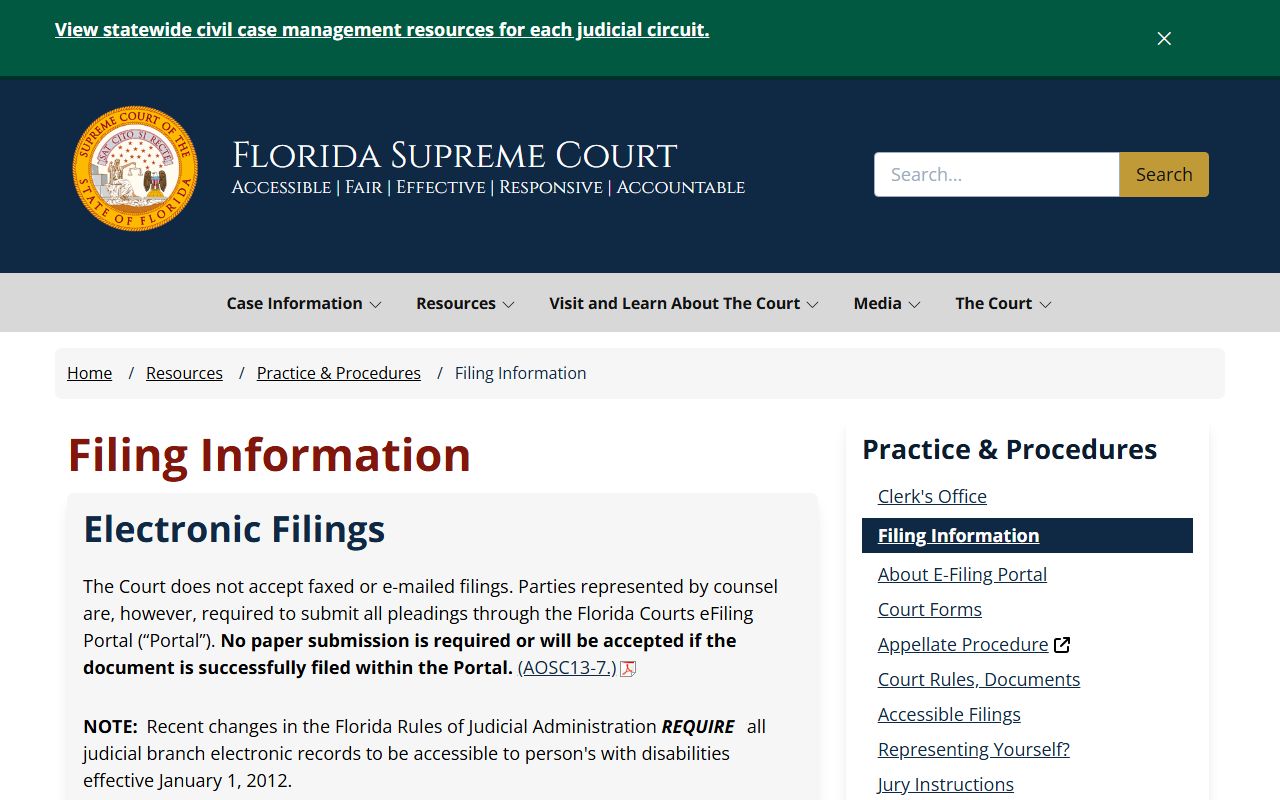
The Supreme Court filing information page has details on appellate-level filing. Supreme Court case filing fees are $300. A notice of joinder costs $295. Attorneys must file through the E-Filing Portal. The court does not accept faxed or emailed filings.
Florida accepts several payment methods for civil court filing fees. Most clerks take cash, cashier's checks, money orders, and major credit cards. Personal checks are not accepted at some offices. Some counties accept attorney trust account checks that say "Trust Account" or "IOLTA" on them. Check your county clerk's policy before you go to file civil court papers.
Self-Help for Florida Civil Cases
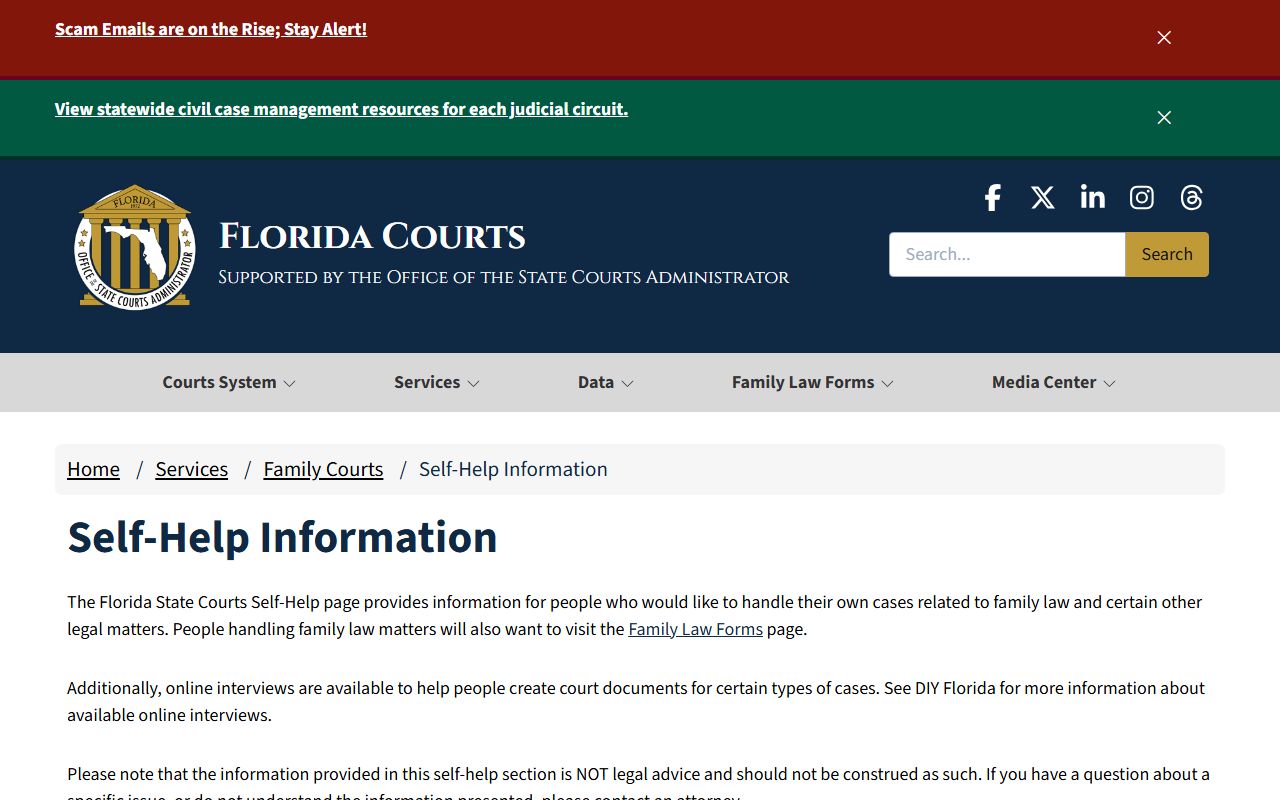
Florida offers several self-help options for people who want to handle civil court cases on their own. The self-help information page on the Florida Courts website provides guides, forms, and instructions for common case types. Self-represented litigants can access these at no cost. The clerk's office in each county may also have packets with forms and step-by-step instructions for filing certain types of civil cases.
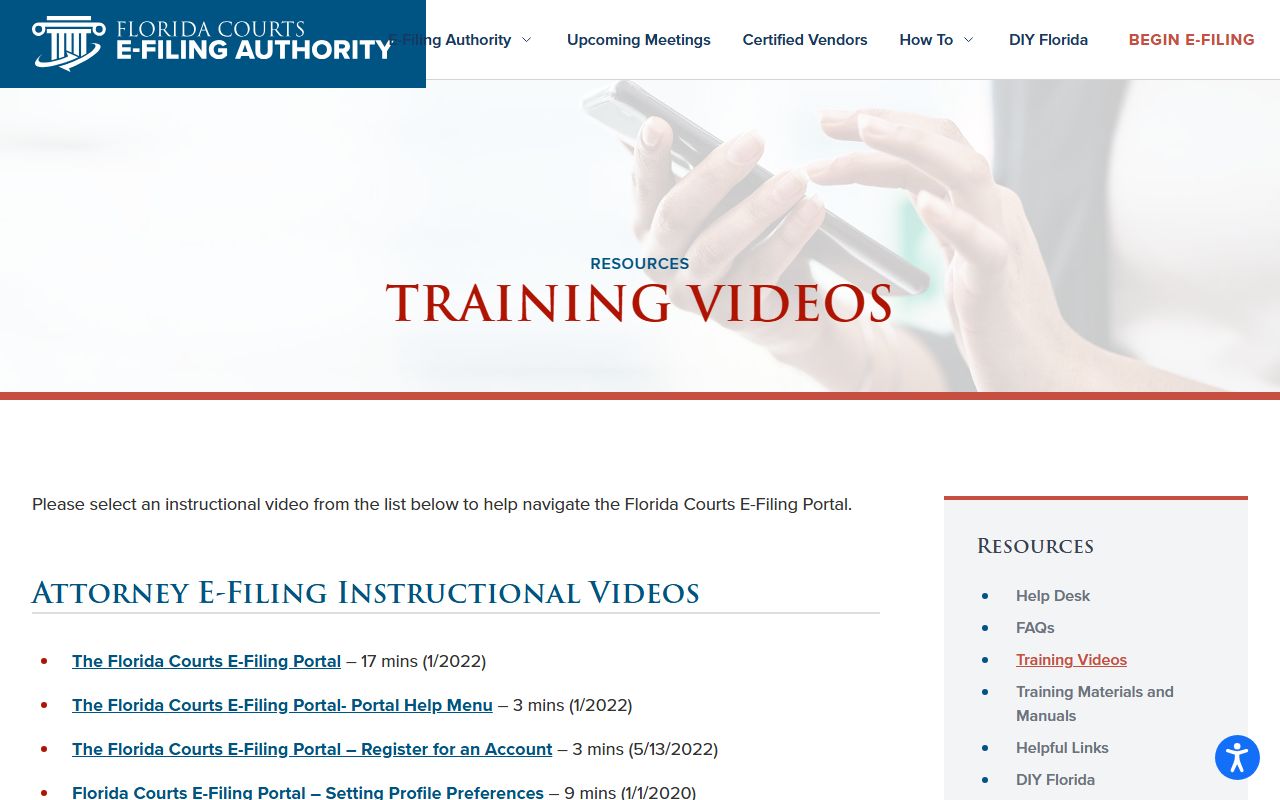
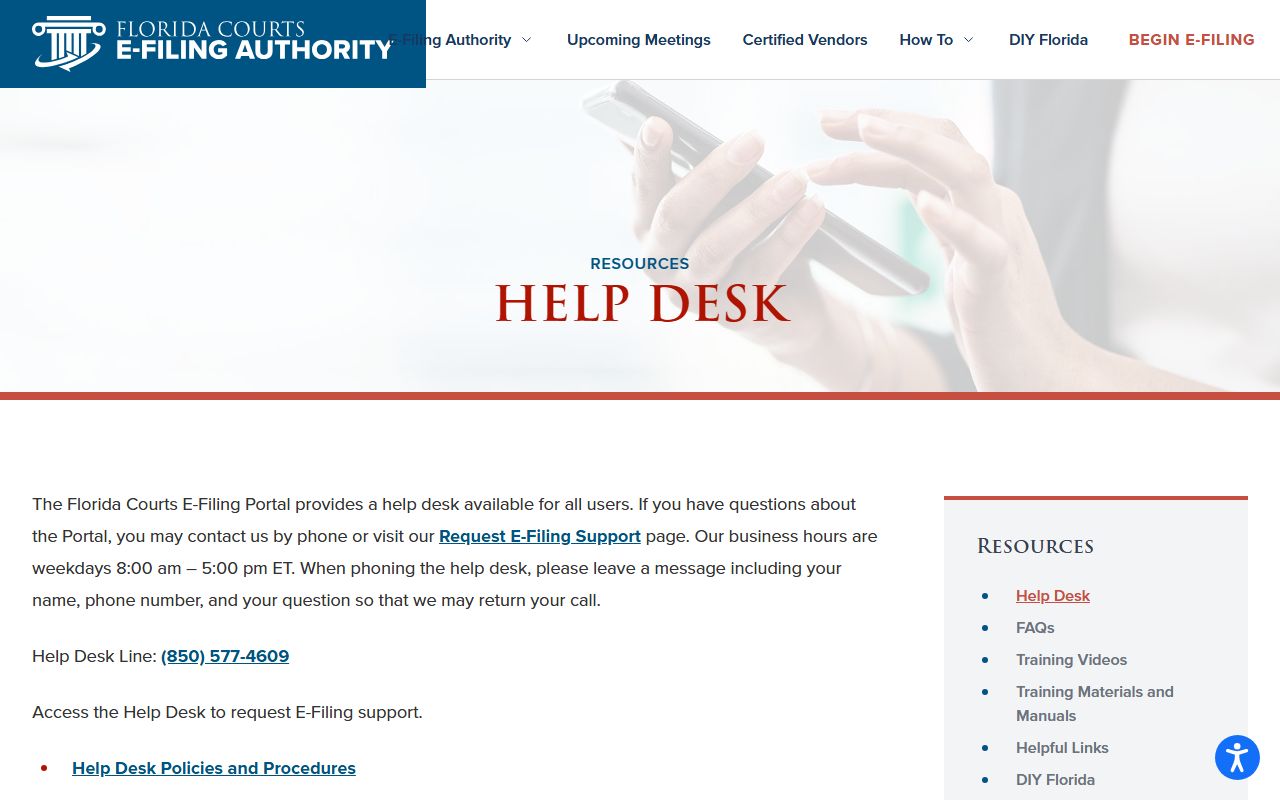
The E-Filing Portal offers training videos that show users how to file civil court documents online. These cover account setup, document submission, and payment processing. The portal's support desk is available weekdays from 8:00 a.m. to 5:00 p.m. Eastern time at (850) 577-4609 for anyone who needs help with filing civil court records in Florida.
The court locations page can help you find the nearest courthouse. Self-represented litigants should register as "Self-Represented Litigant" on the portal to access DIY Florida forms. The clerk's office cannot give legal advice, but staff can point you to the right forms and explain the filing process for civil court cases.
Note: The clerk's office can help you find the right forms but cannot fill them out for you or give legal advice on civil court matters.
Browse Florida Civil Court Records by County
Each of Florida's 67 counties has its own Clerk of Court who keeps civil court records. Pick a county below to find local contact info, search tools, and resources for civil court records in that area.
Civil Court Records in Major Florida Cities
Residents of major Florida cities file civil cases at their county's Circuit or County Court. Pick a city below to find out which county handles civil court records for that area.